Floor Care Schedules: Burnish, Scrub and Recoat, Strip and Finish
A floor care calendar replaces emergency work orders with a plan, and it starts by knowing what each service is for.
October 27, 2026 · 4 min read
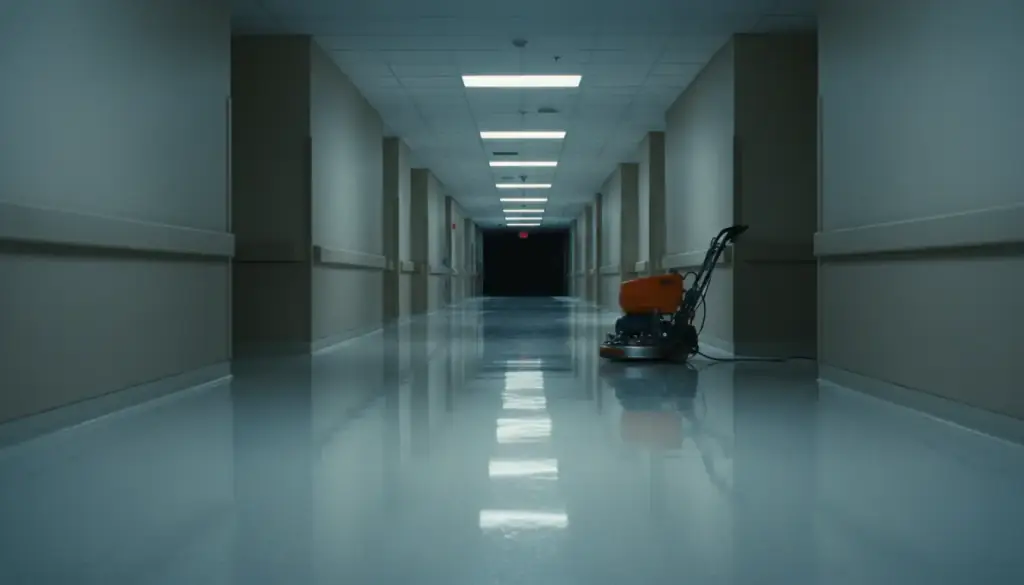
Floors are the largest finished surface in most buildings, and the one most often managed by reaction. Someone notices the shine is gone, a work order goes in, and a crew gets scheduled in a hurry. A floor care schedule replaces that cycle with a plan. To build one, you need to know what the main services do and how they relate to each other.
The four services, in plain terms
- Daily maintenance. Dust mopping, damp mopping or automatic scrubbing as part of the regular janitorial visit. It removes the soil that would otherwise be ground into the finish.
- Burnishing. A high-speed machine with a pad polishes a finished floor and restores gloss. It works when the existing finish is in good shape and simply needs its shine back.
- Scrub and recoat. A machine scrub removes the dirty top layer of finish along with embedded soil, then fresh coats of finish go down. It renews the protective layer without taking the floor down to bare material.
- Strip and finish. The old finish is removed completely, the floor is cleaned and rinsed, and new finish is applied in coats. It is the full reset, used when build-up, yellowing or damage means the existing finish cannot be revived.
OctoClean's floor care service covers all four across resilient flooring such as vinyl and linoleum, grout and tile, and stone floors. Different floors respond to different products and methods, which is why a one-size program rarely works.
How the services stack into a schedule
Think of it as a ladder. Daily maintenance happens constantly. Burnishing sits between the larger projects, bringing back shine as traffic dulls the surface. Scrub and recoat comes next, when the finish looks worn in the traffic paths even after burnishing. Strip and finish is the least frequent, because a well-maintained finish should not need to come off often.
For most facilities the recommendation is either semi-annual or quarterly floor care, depending on the size of the building. The real answer depends on the type of floors, their approximate age and how much traffic the building sees. To set a frequency, the starting point is an inventory: a list of every floor type in the building and its condition. A medical corridor, a lobby of polished stone and a break room with vinyl tile will each earn a different line on the calendar.
If a recurring program is not the right fit, individual floor care visits can be scheduled as needed. The advantage of a program is that the same provider treats the same floors every time, which protects them from long-term damage and helps you avoid replacing them early.
Why floor care runs after hours
A floor care visit typically takes 2 to 5 hours, depending on which services are performed and the size of the space. The work involves wet floors, machinery, chemical products and drying time between coats. None of that mixes with people walking through, so the standing recommendation is to schedule floor care after hours. The reasons are practical:
- Finish needs undisturbed time to dry between coats, and foot traffic across a drying coat leaves scuffs and embeds grit.
- Machines and cords create trip hazards in corridors, lobbies and entrances.
- Product odors and wet-floor signage disrupt staff, patients and students.
- Blocked corridors and entrances during the day cost you far more than the service itself.
Planning around the visit
A little coordination makes an after-hours floor visit go smoothly. Tell the crew which areas are off limits and how they get in and out of the building. Decide ahead of time who clears movable furniture, and confirm the floor will be walkable again before the first person arrives the next morning. If you have a security vendor or an alarm schedule, make sure everyone knows a crew is on site.
If you also have carpet, window or sweeping work coming up, ask whether the visits can be sequenced. Fewer separate after-hours disturbances means fewer chances for something to go wrong.
Protecting floors between visits
Floor damage is often caused by a lack of knowledge about cleaning agents. Well-meaning staff reach for the wrong product, and a finish that took hours to apply is dulled or stripped in minutes. A few habits help. Keep entrance matting in good order so grit stays outside. Teach staff to blot spills and report them, rather than mixing their own solutions. And when something serious compromises a floor, such as a chemical spill or a flood, do not try to clean it yourself. Call the cleaning provider instead, since the wrong first response can turn a repairable problem into a strip-and-refinish job.
What to ask a floor care provider
- Who performs the work? At OctoClean, every floor care specialist must pass floor care training before performing any maintenance, and a quality assurance manager oversees that training so technicians understand both the techniques and the chemistry of the products.
- Will they inventory your floor types and conditions before proposing a frequency?
- Do they work after hours as a matter of course?
- Can they run a recurring program and also respond to an individual visit when something happens?
A floor care plan does not have to be complicated, but it does need to be written down. Call OctoClean at 951-683-5859 or request a facility walkthrough, and the team can inventory your floors, recommend a frequency and schedule the work after hours.
OctoClean, 951-683-5859
Call 951-683-5859More articles
What a Day Porter Does, and When Your Building Needs One
Nightly janitorial resets a building after hours, and a day porter keeps it presentable while people are actually using it.
Electrostatic Disinfection: What It Covers and What It Does Not Replace
The method is fast and thorough, and it only delivers when it sits on top of a solid daily cleaning routine.